CU Carinthia University of Applied Sciences
M.Sc. in Engineering in Systems Design
Starting in 2027, the Systems Design Master's program introduces a new and future-oriented structure that allows students to tailor their studies to the technologies driving innovation in industry, energy, mobility, automation, and digital transformation. Students can choose from four specialized study tracks while benefiting from a common systems engineering foundation.
The program combines advanced engineering fundamentals with specialization-specific expertise, practical projects, and applied research. Students can choose from four distinct areas: Electrical Energy & Mobility Systems (EEMS), Embedded & Electronic Systems (EES), Industrial Power Electronics (PES), and Robotic & Mechatronic Systems (RMS). Each track offers unique opportunities while maintaining a strong focus on systems thinking and innovation.
The Electrical Energy & Mobility Systems (EEMS) specialization focuses on sustainable energy technologies and electric mobility. Students explore battery systems, electrical drives, power electronics, smart grids, renewable energy integration, and artificial intelligence applications within energy systems. The track prepares graduates to contribute to the electrification of transportation, industry, and energy infrastructure.
The Embedded & Electronic Systems (EES) specialization is dedicated to the development of intelligent electronic systems. Students gain expertise in embedded systems, sensors, digital signal processing, FPGA technologies, industrial automation, and AI-enabled embedded applications. This pathway prepares graduates to design complete hardware-software solutions for sectors such as Industry 4.0, automotive systems, communication technology, and medical engineering.
The Industrial Power Electronics (PES) specialization addresses one of the most important enabling technologies in modern industry and energy systems. Students learn how to develop efficient power conversion systems, electrical drives, semiconductor-based power electronics, intelligent energy systems, and advanced control solutions. The specialization supports innovation in renewable energy, electric mobility, industrial automation, and future energy infrastructures.
With Robotic & Mechatronic Systems (RMS), students enter the exciting world of intelligent robotics, automation, and smart machines. Combining robotics, mechatronics, embedded technologies, automation engineering, and artificial intelligence, the specialization focuses on designing systems that can perceive their environment, make decisions, and respond autonomously. Applications range from smart manufacturing and industrial robotics to autonomous systems and next-generation production technologies.
A defining feature of all four specializations is their strong practical orientation. Students participate in laboratory exercises, industry-related development projects, research activities, and dedicated research internships. These experiences enable them to apply their knowledge to real engineering challenges while building valuable professional skills and industry connections.
Graduates of the Systems Design program are well positioned for careers in some of the fastest-growing technology sectors worldwide. Depending on their chosen specialization, they may work in energy engineering, e-mobility, electronics development, robotics, automation, industrial systems, artificial intelligence, research and development, and other high-tech industries.
More than a traditional engineering degree, Systems Design prepares students to think across disciplines, understand complex technological ecosystems, and create innovative solutions for global challenges. Whether your passion lies in intelligent electronics, electric mobility, advanced power systems, or robotics, the program provides the expertise, practical experience, and systems perspective needed to build a successful international engineering career.
Courses offered by Carinthia University of Applied Sciences
Master Degree Programs (in English)
- M.Sc. Applied Data Science (M.Sc., 4 semesters)
- M.Sc. Communication Engineering (M.Sc., 4 semesters)
- M.Sc. Integrated Systems and Circuits Design (M.Sc., 4 semesters)
- M.Sc. Medical Engineering and Analytics (M.Sc., 4 semesters 100% online)
- M.Sc. Systems Design (M.Sc., 4 semesters)
Bachelor Degree Programs (in English)
- B.Sc. Green Electronics (B.Sc., 6 Semesters)
- B.Sc. Green Mechatronics (B.Sc., 6 Semesters)
- B.Sc. Green Transition Engineering (B.Sc., 6 Semesters)
- B.Sc. Medical Engineering (B.Sc., 6 Semesters)
- B.Sc. Network Engineering (B.Sc., 6 Semesters)
Our University of Applied Sciences
Since its founding, CU Carinthia University has evolved into a unique educational institution in Carinthia. Through the continuous development of its Degree programs and close collaboration with industry and academia, the university ensures that students receive a forward-looking education that is in step with the times.
CU Carinthia University embodies the principle of direct practical relevance. Full-time and part-time faculty members, as well as guest lecturers from industry and business, ensure an interdisciplinary, internationally oriented higher education experience. Currently, approximately 40 Degree programs in the fields of civil engineering, technology, health and social services, and business are offered at the campuses in Spittal, Villach, Klagenfurt and Feldkirchen.


 ☰
☰
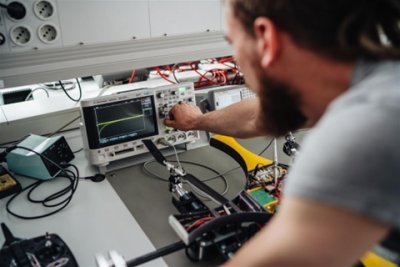 Credit ©FH Kärnten / Hofmann